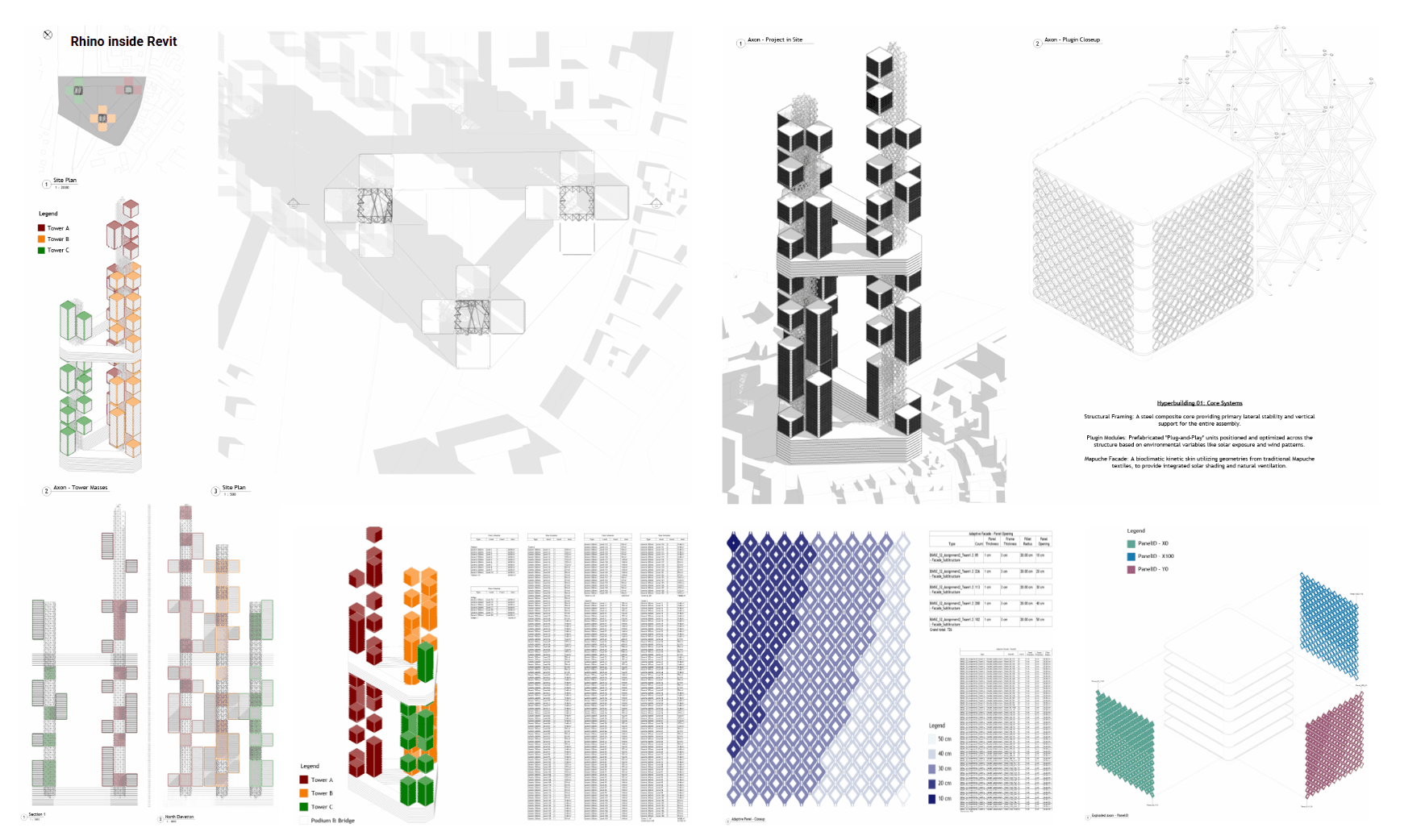
01 · Concept
The core does the breathing
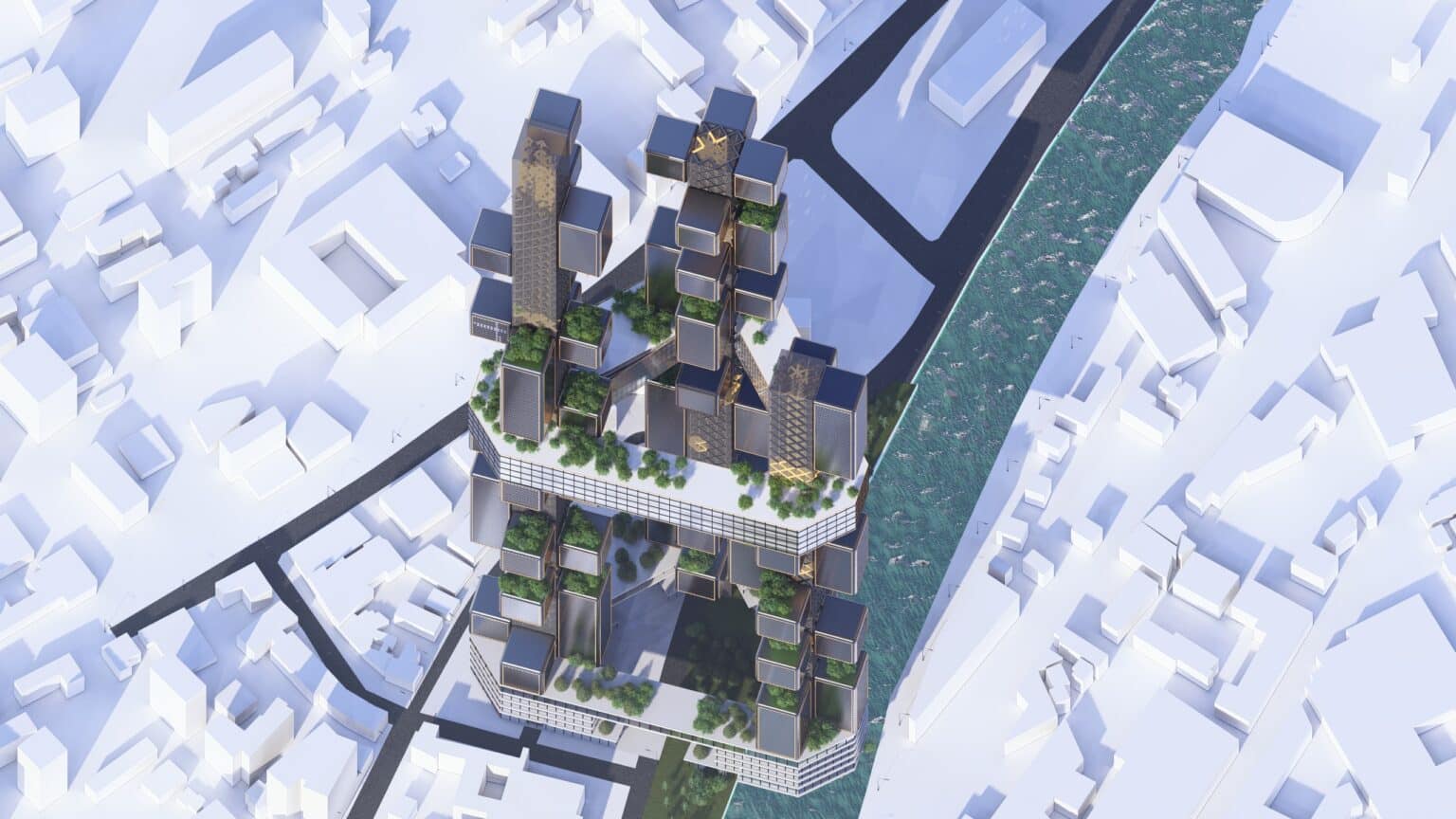
Santiago's air is the site condition. The tower captures, cleans and redistributes it through a breathing core, which turns a building into a piece of civic infrastructure rather than a neighbour to it.
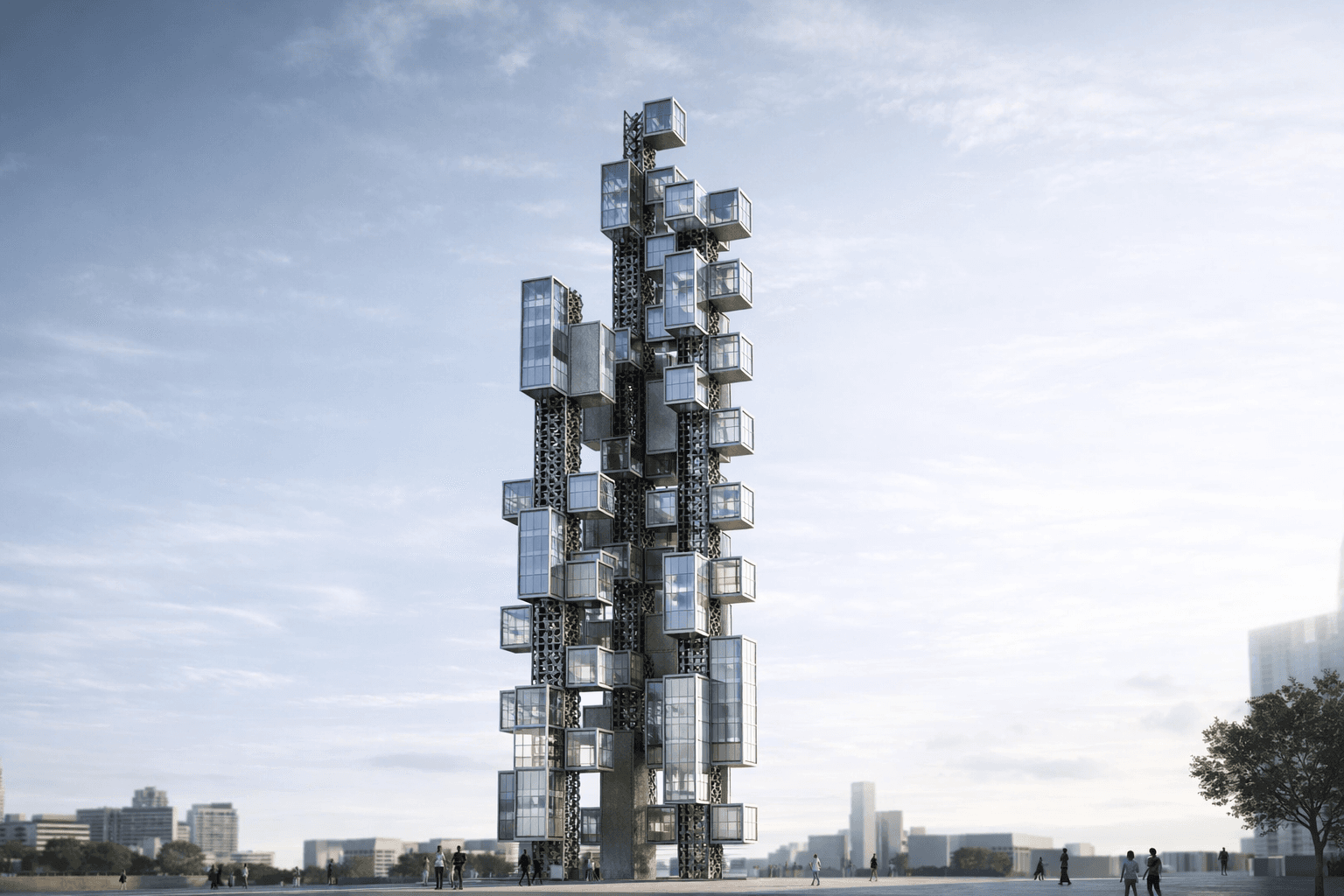
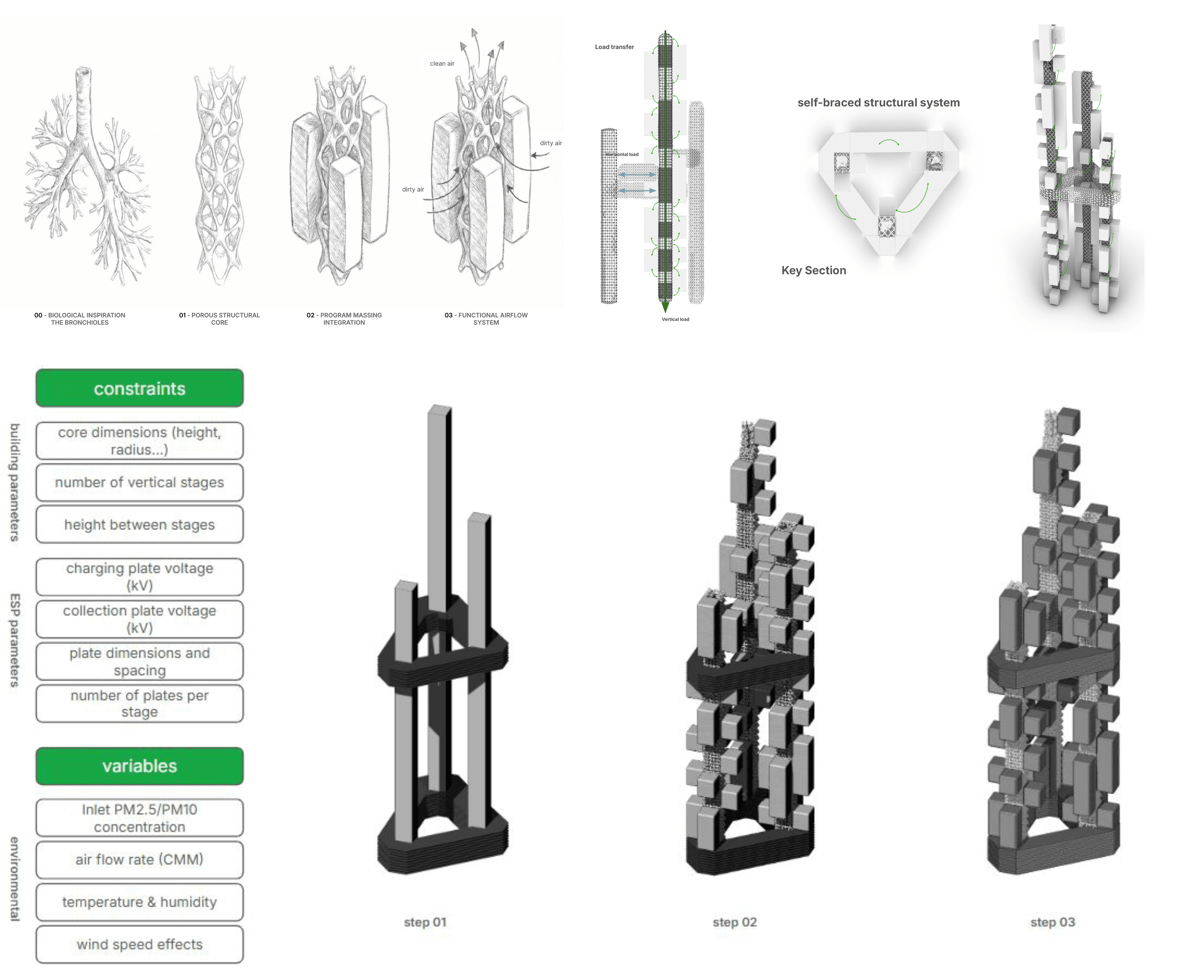
The Hyper Lung takes the tower's least interesting element (the core) and gives it the building's main job. Around it, a topology-optimised skeleton thickens where load demands and thins where it does not.
Context
IAAC · Barcelona
Year
2026
Stack
Topology optimisation · Alpaca · Grasshopper · Radiation analysis
Brief
A vertical ecosystem in Santiago where architecture, wind, and energy converge. The Hyper Lung captures, cleans, and redistributes polluted air through a breathing core, transforming the tower into living infrastructure that breathes with the city.
01 · Concept
Santiago's air is the site condition. The tower captures, cleans and redistributes it through a breathing core, which turns a building into a piece of civic infrastructure rather than a neighbour to it.
02 · Structure
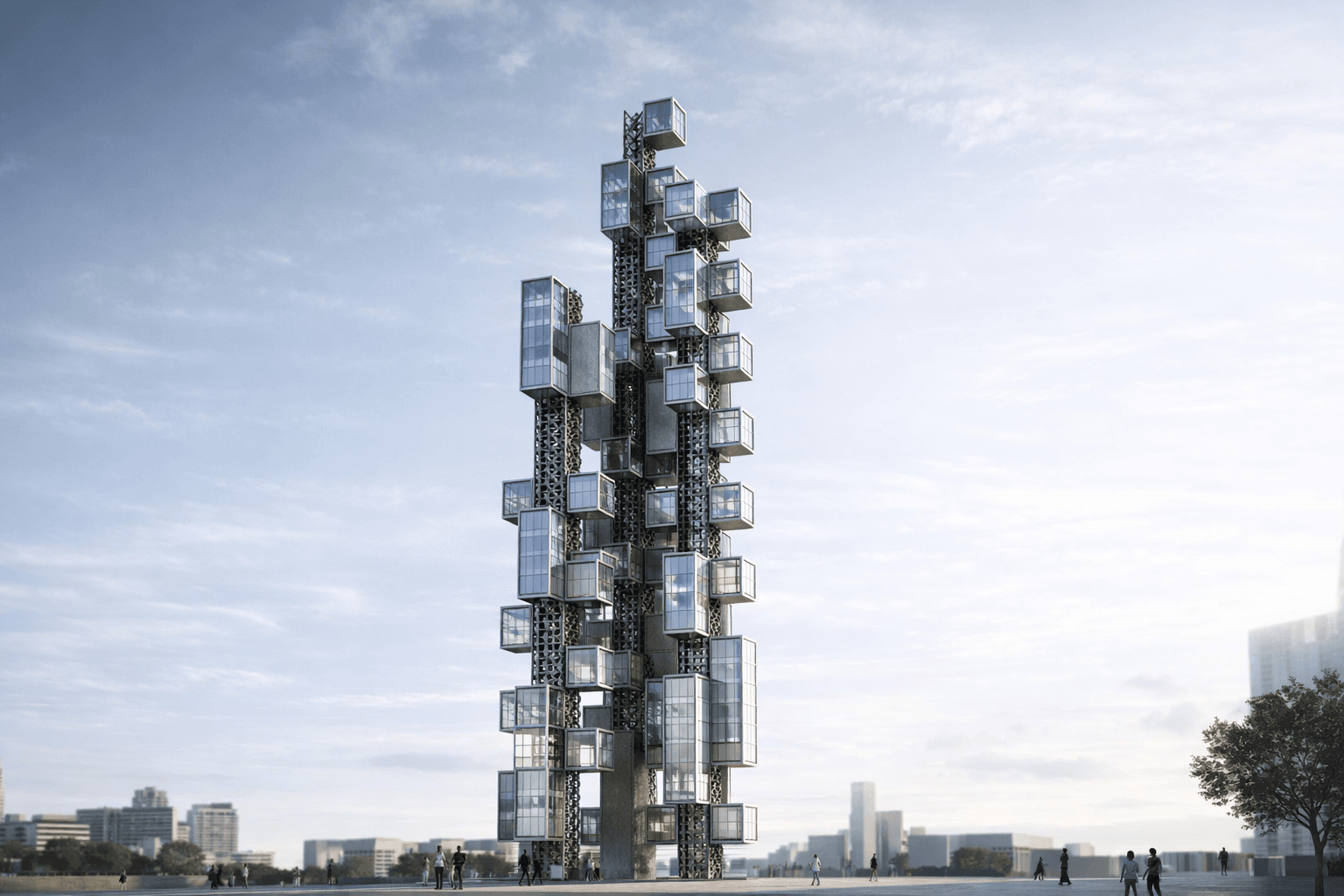
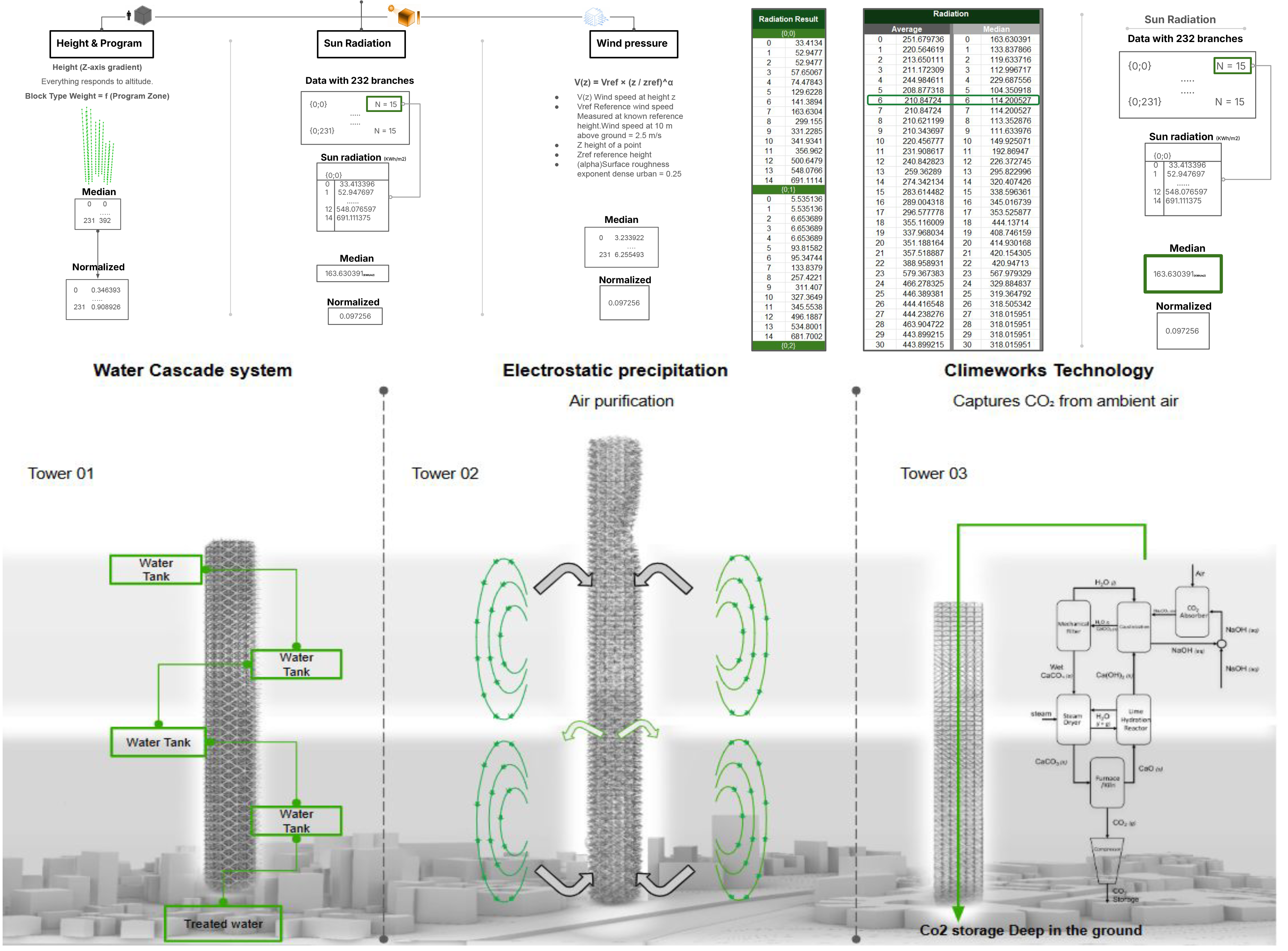
The primary lattice is topology-optimised: Alpaca stress analysis drives density up at high-load junctions and tapers it through low-stress zones. Plugin masses are distributed along that lattice by incident radiation, so structure and thermal performance are resolved together.
03 · Outcome
Load runs from volume to core to foundation, with three cores forming a triangle that turns vertical mass into a self-braced structural system: the arrangement the whole geometry is organised to make possible.