Skip to content
← All projects

Le Monstre Merveille

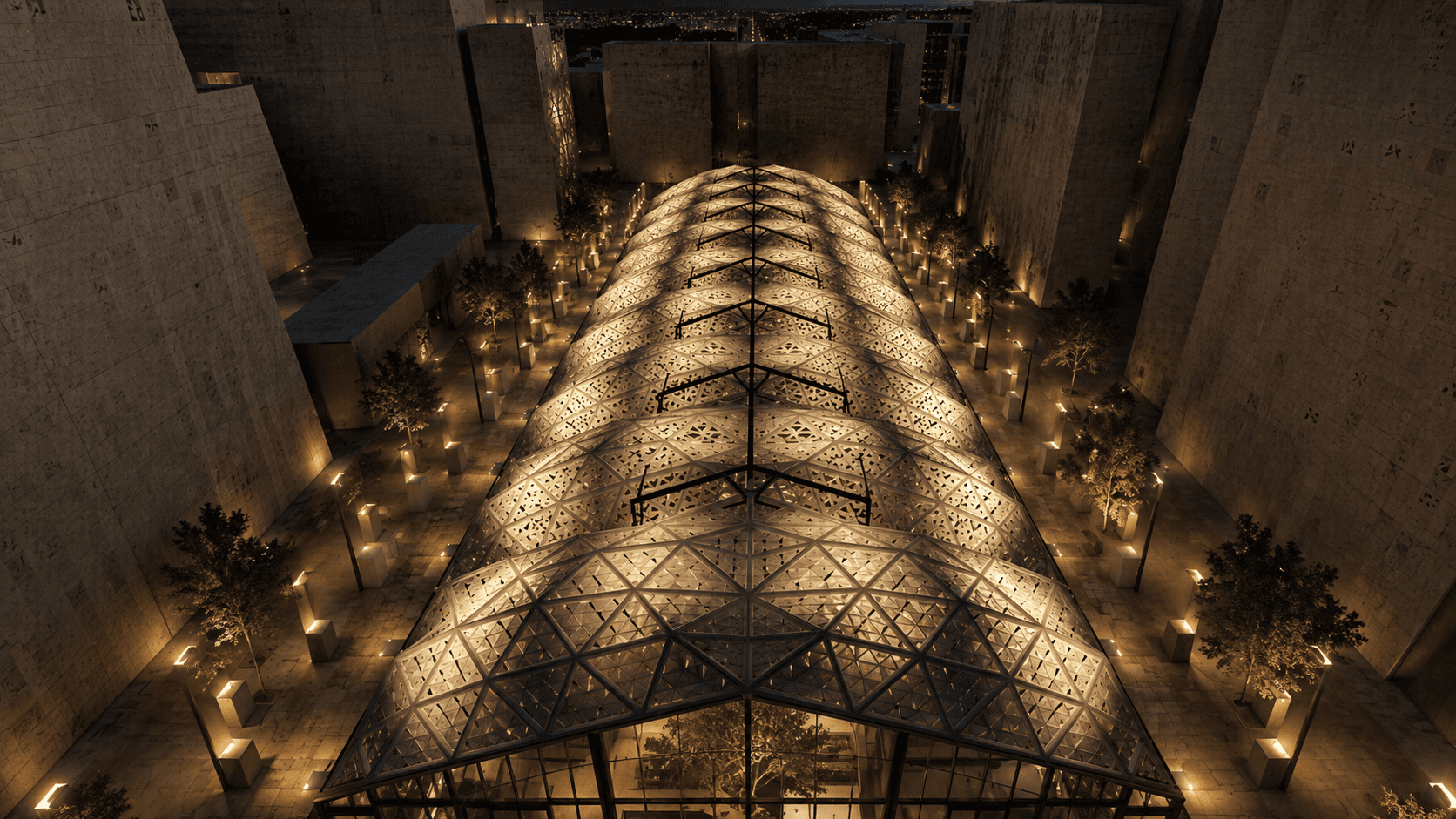
The name carries the argument. A form that reads as complex, almost monstrous from outside produces a delicate and controlled interior, and it does so by adapting to the existing building rather than clearing it.

Context

IAAC · Barcelona

Year

2026

Stack

Parametric design · Rhino · Grasshopper · Adaptive reuse

Le Monstre Merveille

Brief

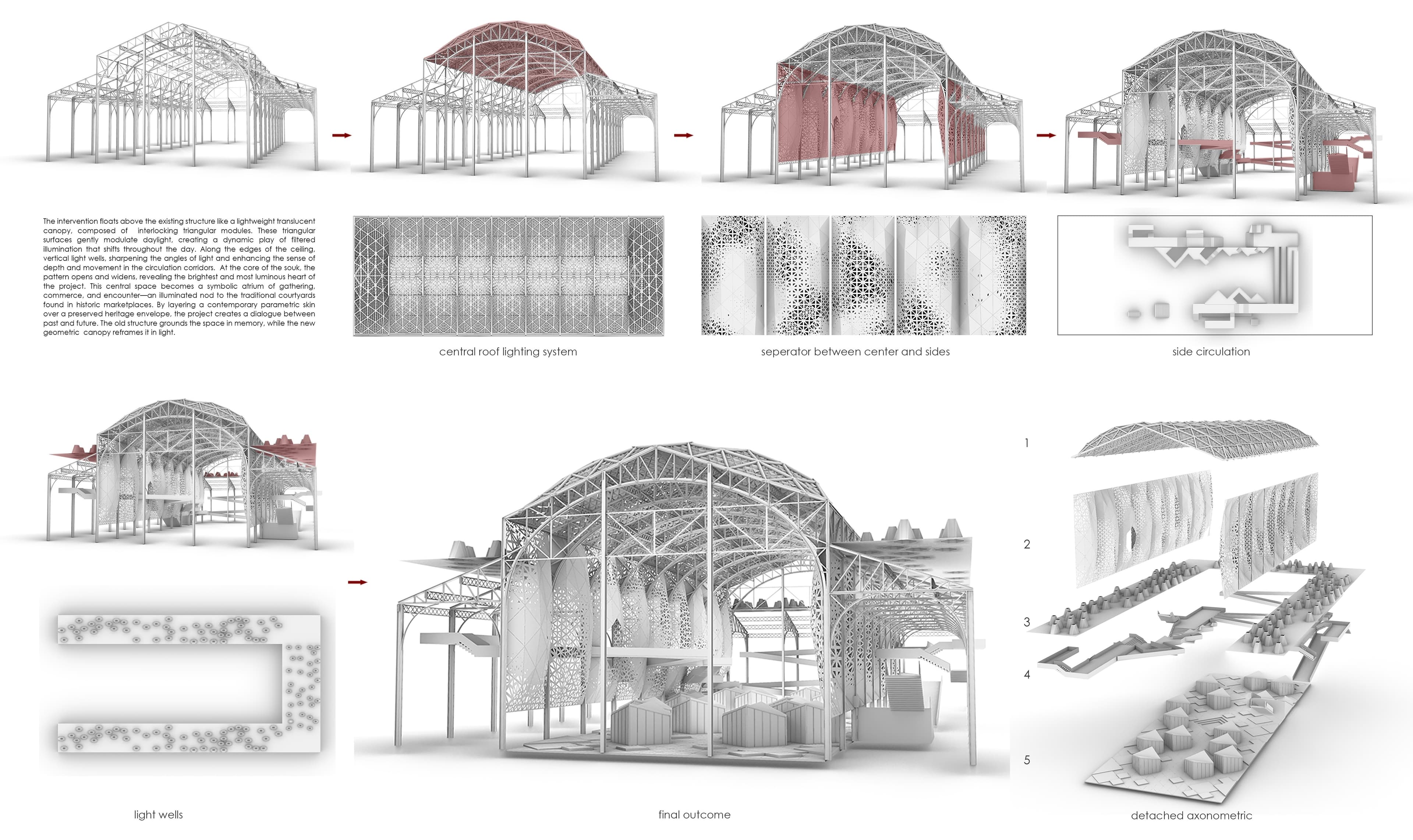
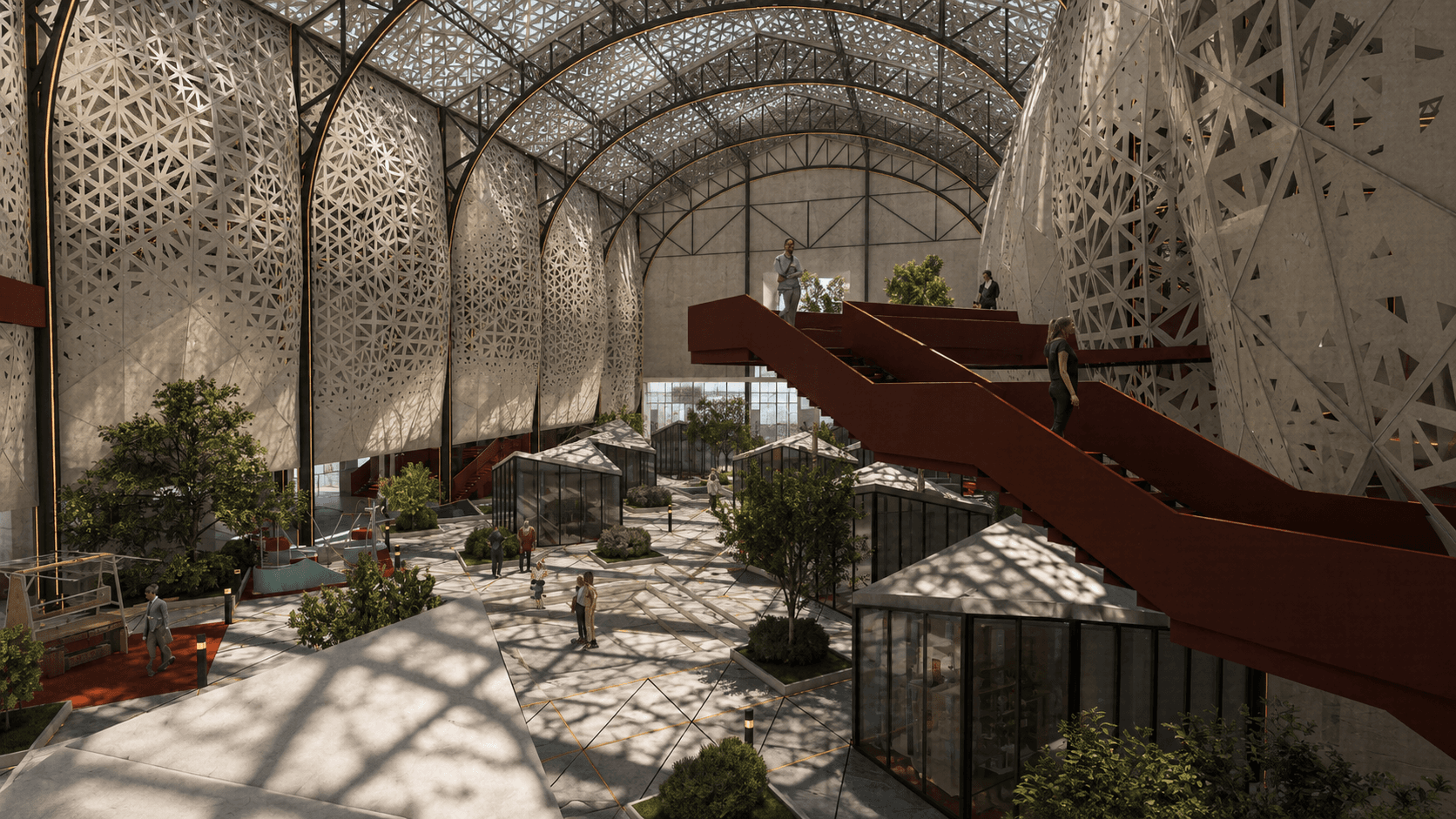
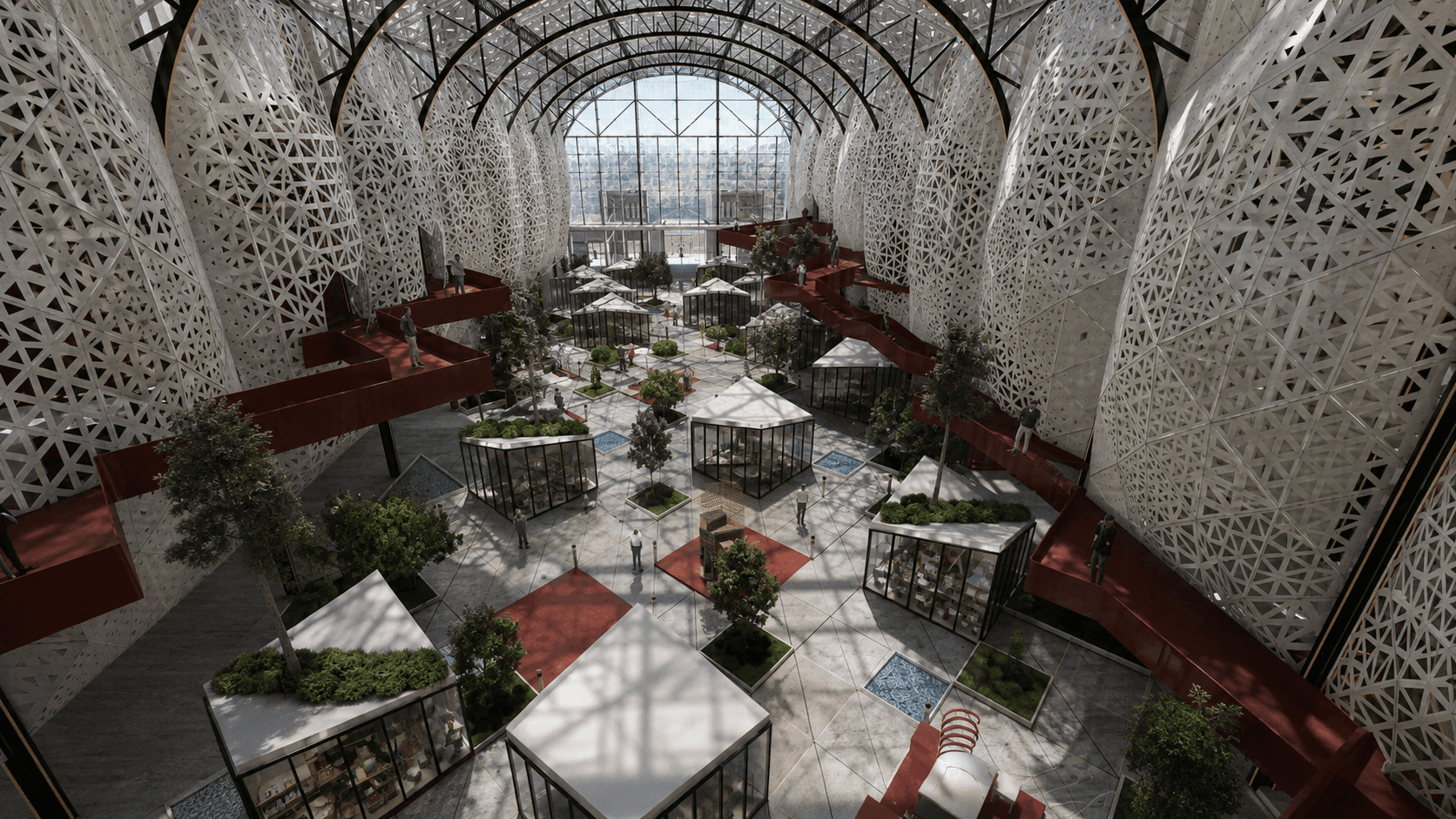
The name Le Monstre Merveille reflects the duality: a structure that appears complex and almost monstrous in form, yet creates a delicate, controlled, and humane interior experience. Rather than replacing the existing structure, the concept focuses on preserving the order and hierarchy of the original architecture, while inserting a new system that acts almost like a parasite, adapting, wrapping, and growing within it.
01 · Duality

Monstrous outside, humane inside

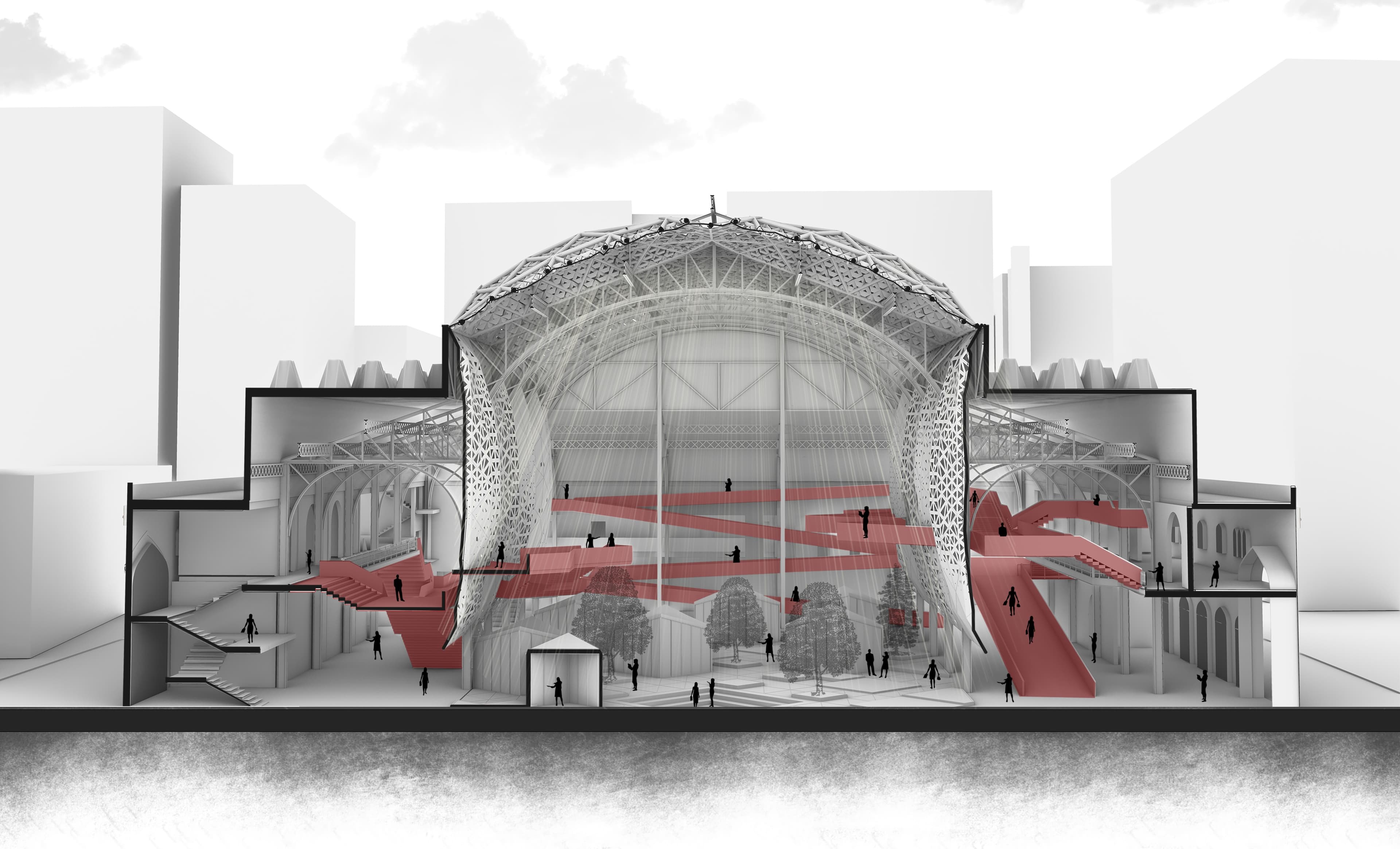
The exterior is deliberately difficult: complex, almost monstrous. What it produces internally is the opposite: delicate, controlled, humane. The project treats that contradiction as the design rather than a problem to resolve.

Le Monstre Merveille — 1
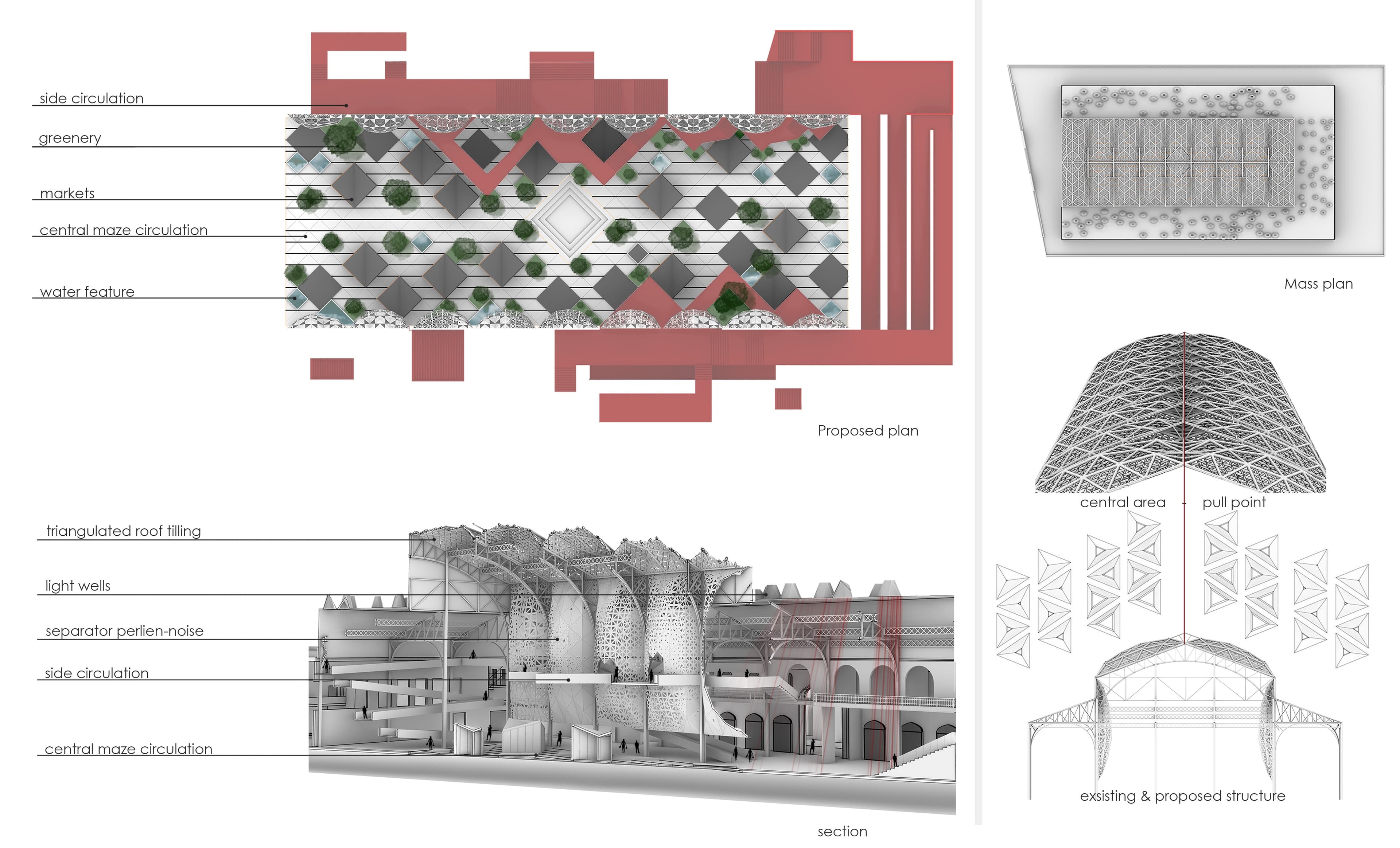
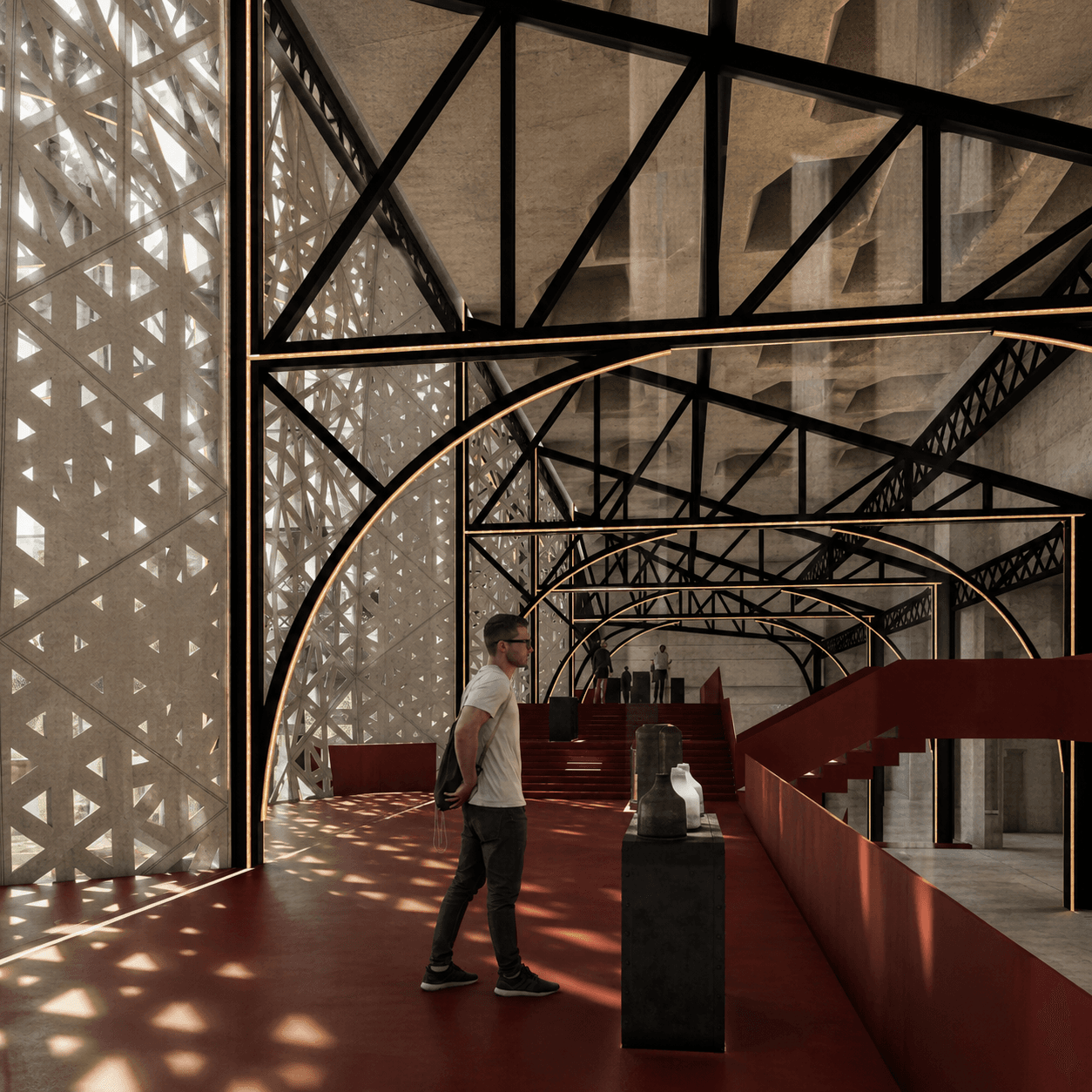
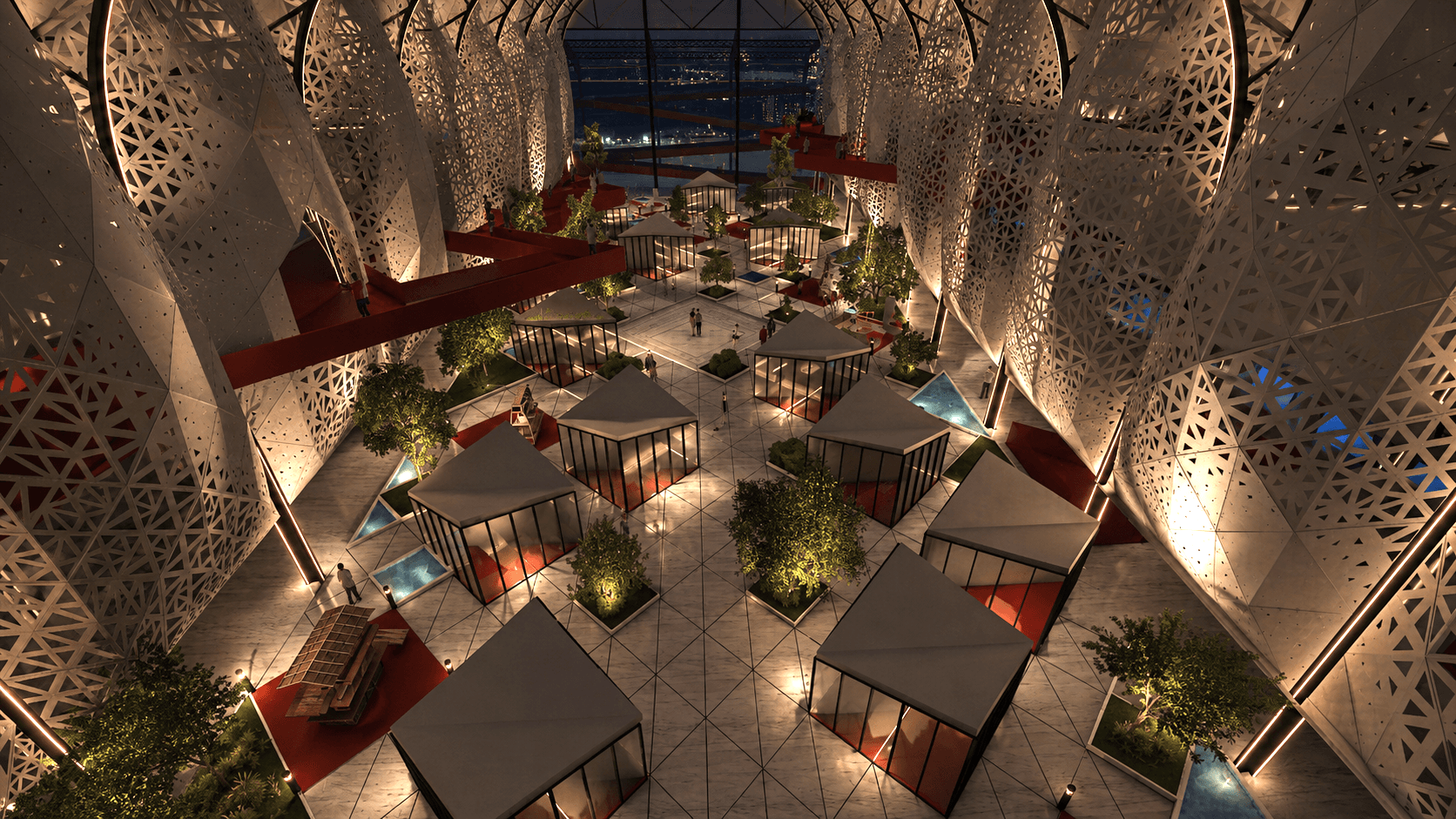
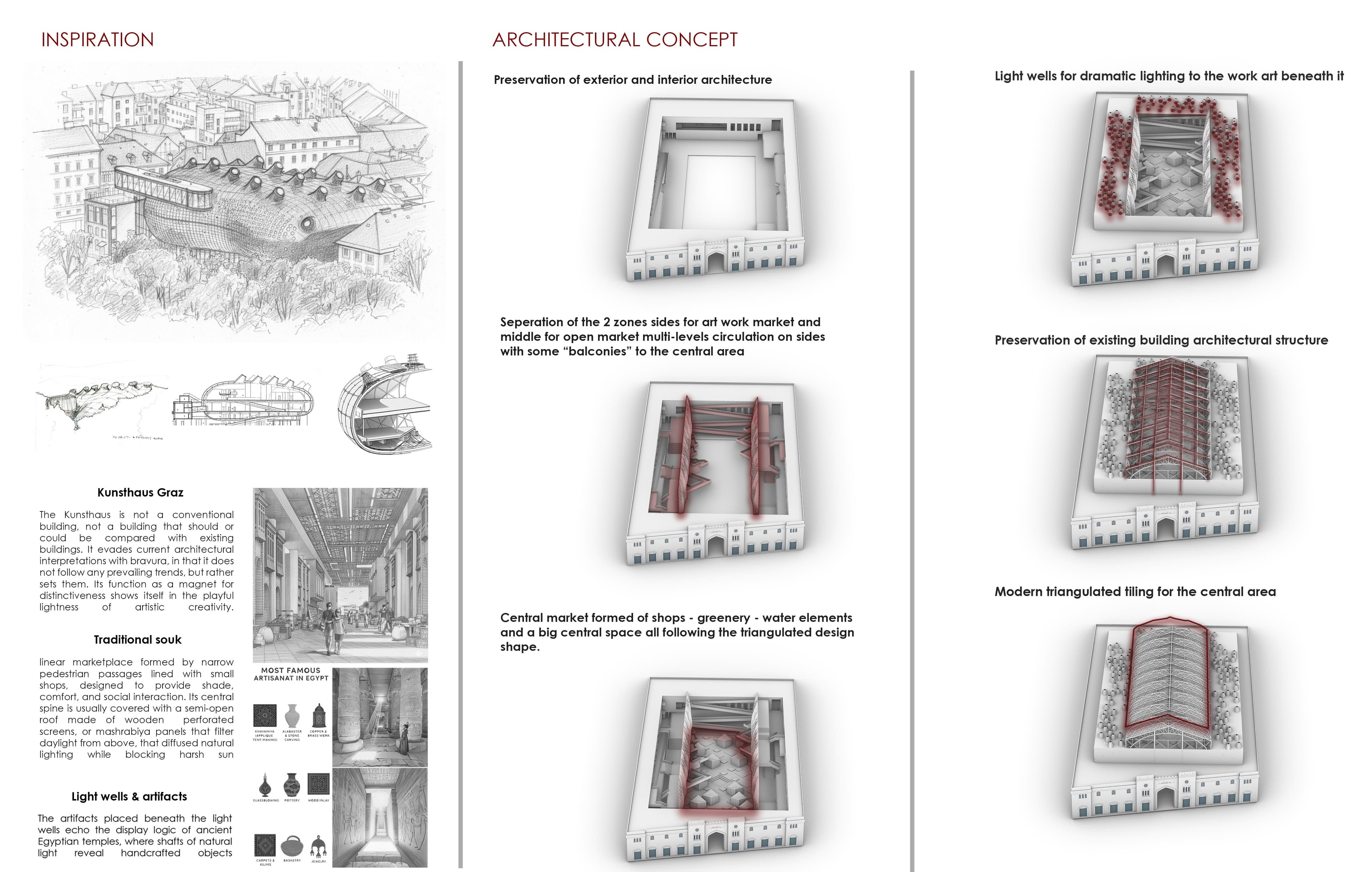
Design Concept & Computational Design System: The architectural concept is based on three main zones, organized along a central axis. The existing building envelope is preserved, while a new internal structure defines circulation, spatial separation, and visual continuity. A key design move is the central space, which acts as the heart of the project. This void allows light to penetrate deep into the space and organizes movement through ramps and bridges, creating a continuous architectural promenade rather than isolated floors.
Le Monstre Merveille — 2
Le Monstre Merveille — 3
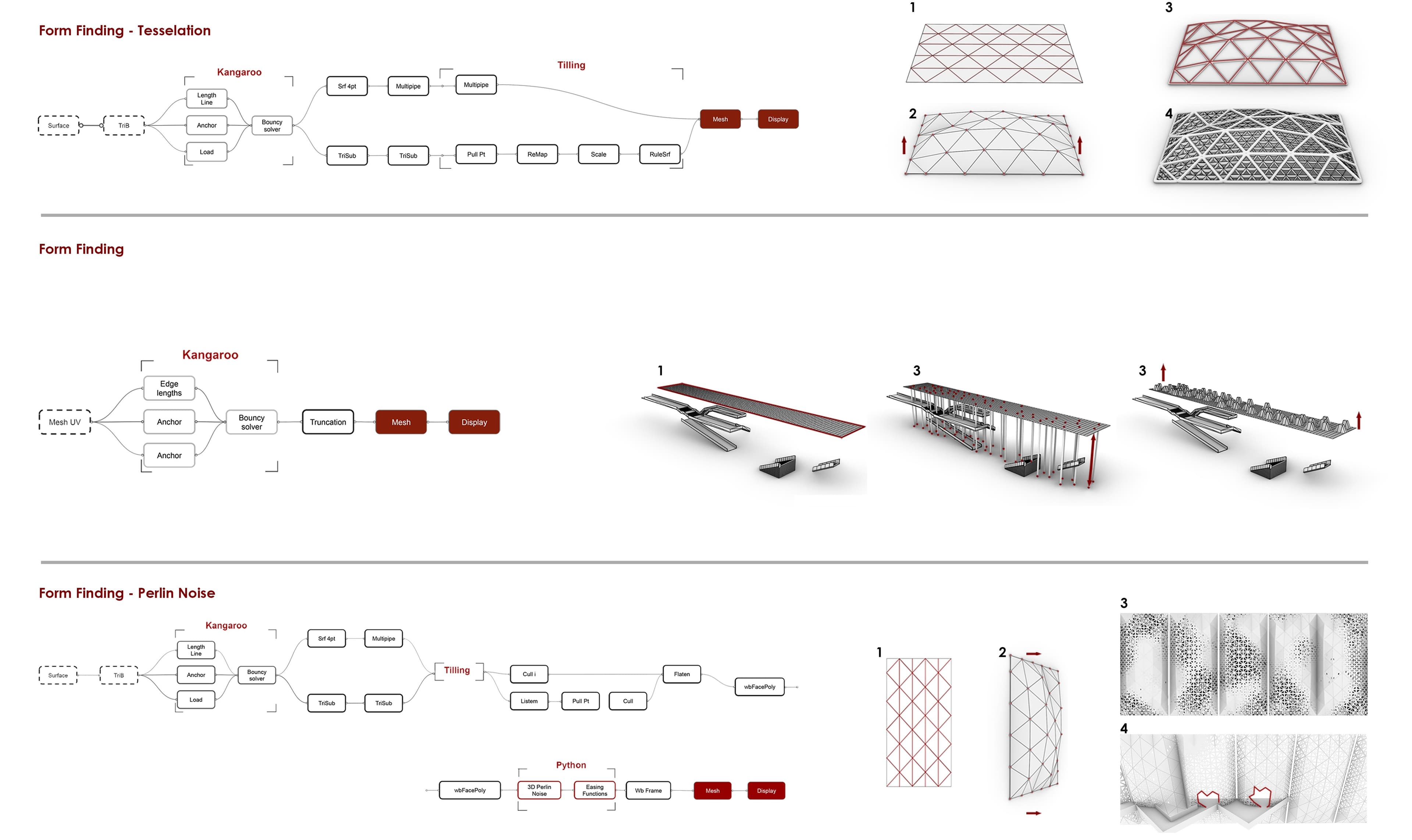
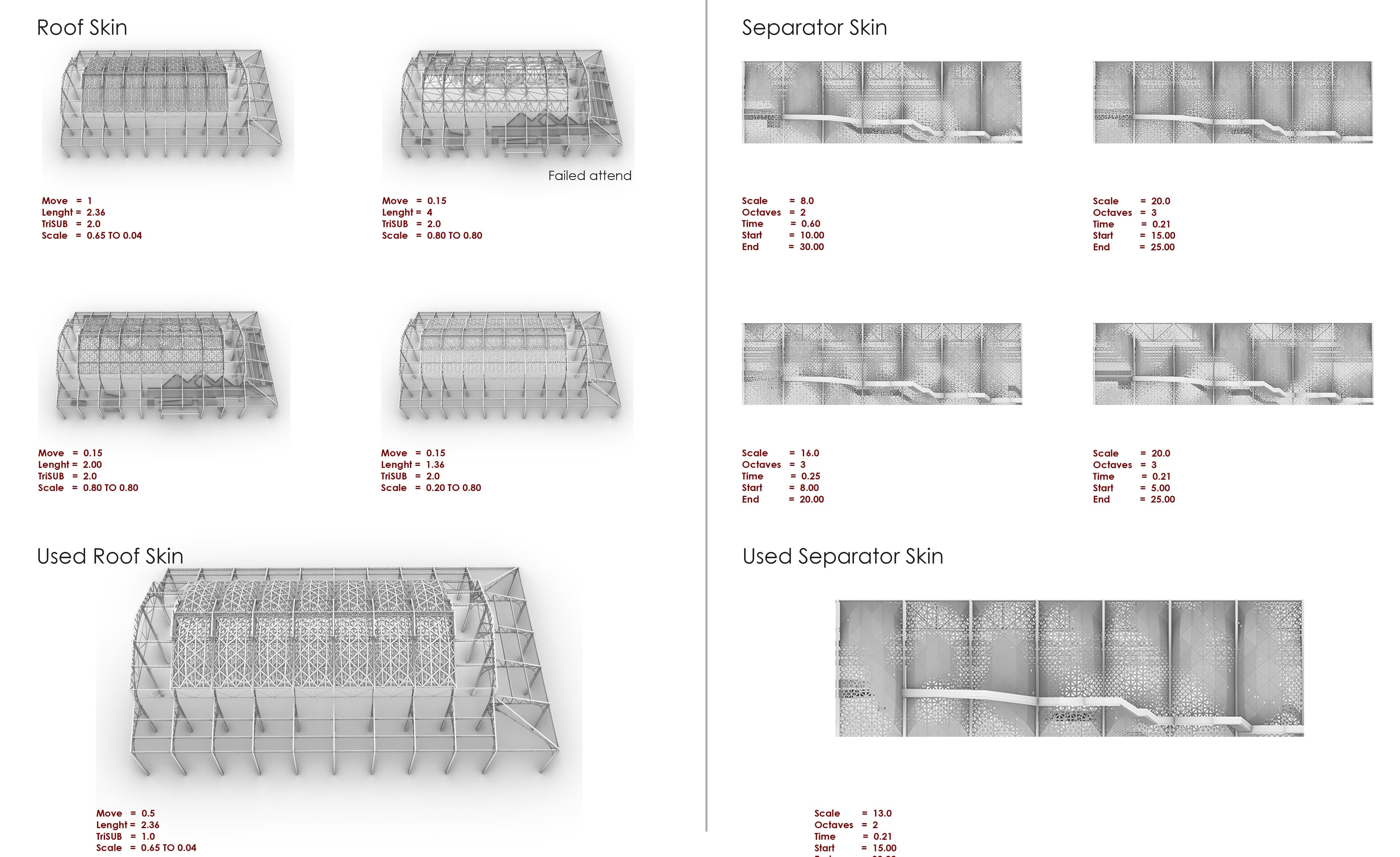
Computational Design Methodology & Form Finding Process: For the workflow, the 3 elements created follow the same form-finding using Kangaroo with slightly different setups. For the central area, the approach after using Kangaroo was to create a triangulated tiling that closes at the end and opens in the center of the space using the pull point and scale to get the final shape alongside the main structure using the multipipe. The side consists of the kangaroo and truncation approach. While the separator area follows the same architecture of the central roof, with a difference in the final tiling approach created using Perlin Noise in Python, followed by a cull pattern based on certain points to create a sort of gate to the balconies.
Le Monstre Merveille — 4
Computational Design Methodology & Form Finding Process: For the workflow, the 3 elements created follow the same form-finding using Kangaroo with slightly different setups. For the central area, the approach after using Kangaroo was to create a triangulated tiling that closes at the end and opens in the center of the space using the pull point and scale to get the final shape alongside the main structure using the multipipe. The side consists of the kangaroo and truncation approach. While the separator area follows the same architecture of the central roof, with a difference in the final tiling approach created using Perlin Noise in Python, followed by a cull pattern based on certain points to create a sort of gate to the balconies.

02 · Insertion

Parasite, not replacement

The original architecture's order and hierarchy are preserved. The new system adapts, wraps and grows within it, taking the existing structure as a host with rules to be respected rather than a site to be cleared.

Le Monstre Merveille — 5
Le Monstre Merveille — 6
Le Monstre Merveille — 7

03 · Outcome

Two logics, one building

What results reads as a single building carrying two structural arguments at once: the original's hierarchy still legible beneath a geometry that could not have been drawn without it.

Le Monstre Merveille — 8
Le Monstre Merveille — 9
Le Monstre Merveille — 10